

Bhutanese scholars engage in cultural learning ahead of NAIDOC Week
Posted: 6 July 2026
Ahead of NAIDOC Week 2026 (5–12 July), Australia Awards scholars from Bhutan have been learning first-hand about Australia’s First Nations peoples. NAIDOC Week is an annual celebration of the cultures, histories and achievements of Aboriginal and Torres Strait Islander peoples.
From 22 to 25 May, Bhutanese scholar Dorji Wangdi travelled to South Australia’s Ikara-Flinders Ranges National Park with 10 other scholars to learn about the Adnyamathanha people. John Solar, a Yura man and Adnyamathanha cultural educator, welcomed the scholars to Country and guided them during the visit. (Read more about Dorji’s own reflection on the experience here.)
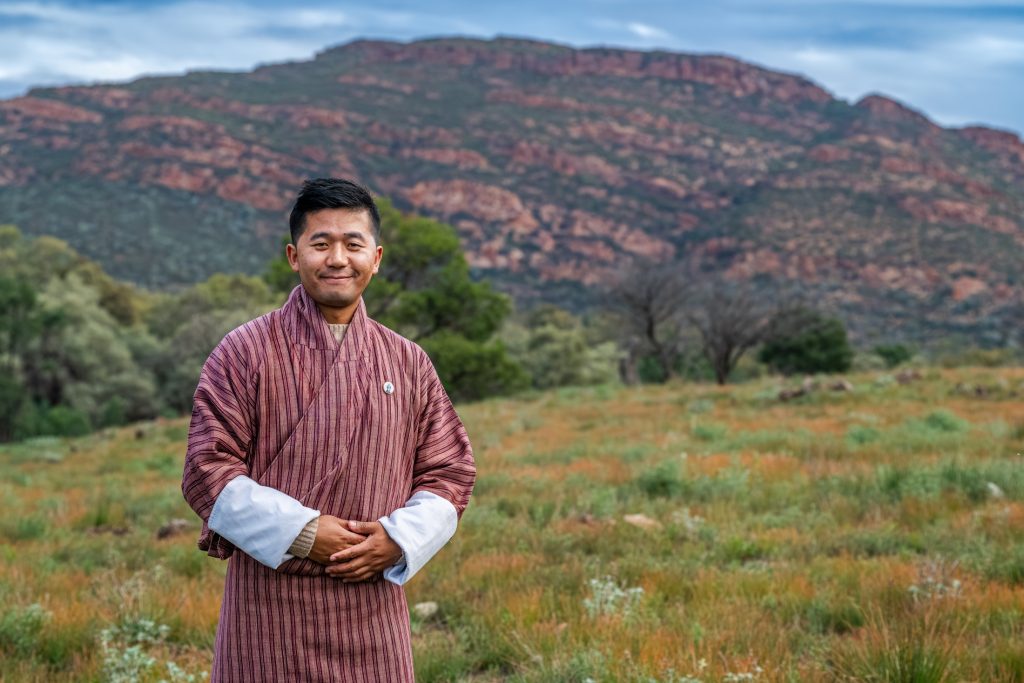
Scholar Dorji pictured at the Ikara-Flinders Ranges National Park.
“Through language, a smoke offering, and John’s explanation of respect for Country, creation stories and sacred land features, I was introduced to the depth of Adnyamathanha people’s connection to place,” says Dorji. “Standing on Country and listening to John, I gained a deeper appreciation that land is not only a physical space to visit, manage or develop. It can also be a cultural and spiritual landscape that carries memory, identity and responsibility.”
John guided the scholars through activities such as cooking damper, making fire and hiking to view sacred rock art, as well as a tour of the Brachina Gorge Geological Trail.
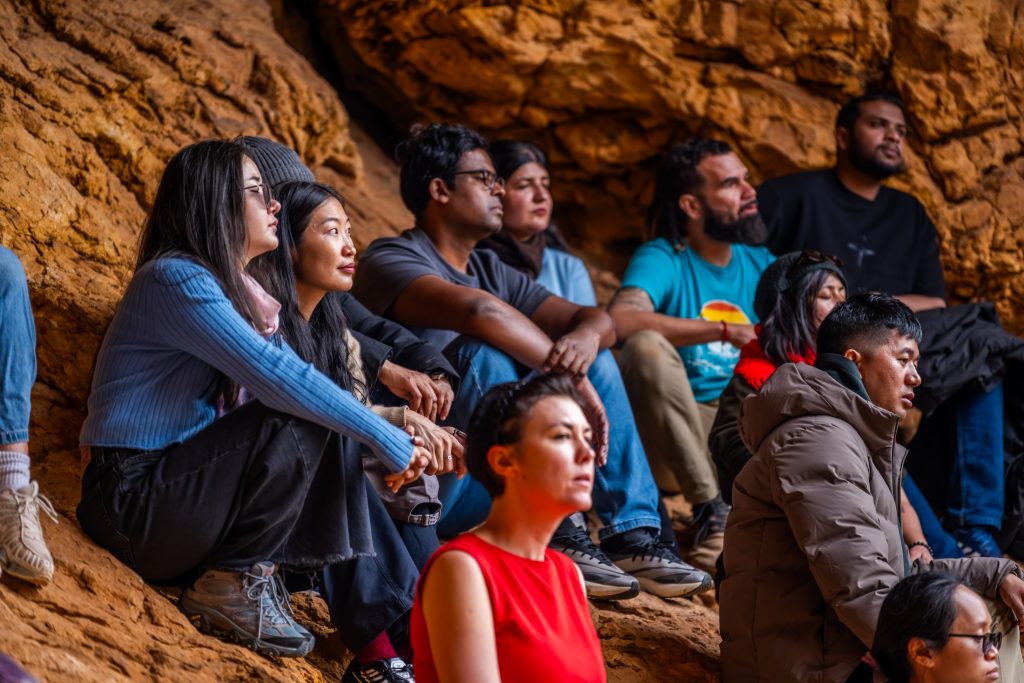
Guide John (in light blue t-shirt) leads a reflective exercise with Dorji (right, middle), Alice Tamang (in red dress), Australia Awards – South Asia & Mongolia’s Indigenous Engagement Adviser, and other scholars.
“At Brachina Gorge, I was introduced to how cultural knowledge, geology and environmental stewardship can be shared within one landscape,” Dorji says. “While the gorge showed ancient geological history, John also spoke about plants used for food, medicine and ceremony, as well as knowledge of seasons, fire-making and navigation by stars. This helped me reflect on how sustainable tourism can become more meaningful when visitors are guided to understand both the physical landscape and the cultural knowledge connected to it.”
In addition, the experience offered Dorji professional lessons relevant to his work back home. “As a civil engineer working in sustainable tourism infrastructure development in Bhutan, I also noticed the importance of practical site planning and long-term management,” he says. “Walking trails helped guide visitors through sensitive areas, while information signboards supported learning and respectful behaviour. Basic visitor facilities such as campsites, restrooms and water points improved comfort while reducing pressure on the wider landscape.” These examples reminded Dorji that tourism infrastructure is about more than building facilities. It also requires “managing access, safety, maintenance and environmental protection over time”.
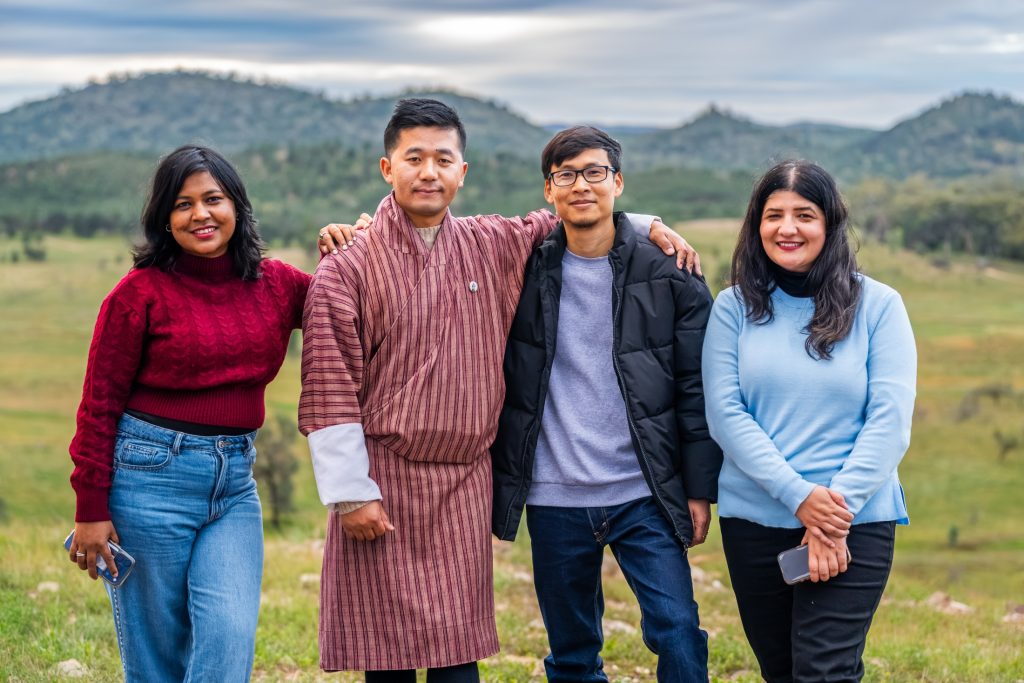
Dorji (second from left) photographed with other scholars from Bangladesh and Pakistan while visiting the Ikara-Flinders Ranges National Park.
In June, three Bhutanese Australia Awards scholars participated in two online weaving workshops led by Ronnie Jordan, a Pitta Pitta Wangkamahdla woman, artist, weaver and cultural facilitator. Scholars received weaving materials before the sessions so they could follow Ronnie’s instructions and practise the techniques as she demonstrated them.
Ronnie introduced scholars to the cultural significance of weaving, explaining that it is much more than a craft. She shared how woven forms can carry stories, represent relationships and support connection to Country, community and identity.
The workshops also explored the environmental knowledge behind weaving. Ronnie spoke about natural fibres, seasonal cycles, and the ways Aboriginal people have used local materials to create practical items such as baskets, containers, fish traps and nets.
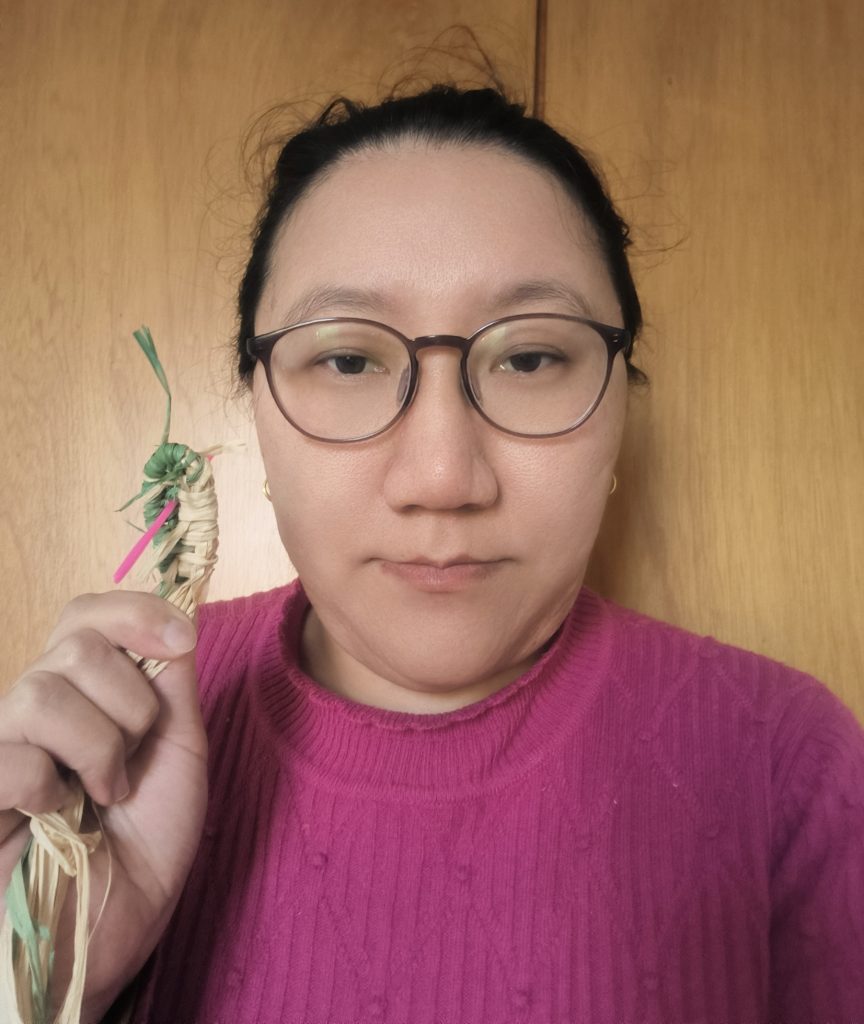
Bhutanese participant, Kuenga Choden, shows how her weaving started.
Scholars then had the opportunity to practise weaving themselves, following step-by-step instructions using raffia. The sessions helped participants build their understanding of First Nations cultures through practical learning, respectful discussion and creative participation.
“I really enjoyed learning how Aboriginal communities used materials found around them to create beautiful woven pieces and how every item reflects patience, dedication, skill, and a deep connection to their livelihood and culture,” said Bhutanese participant Tshewang Peldon.
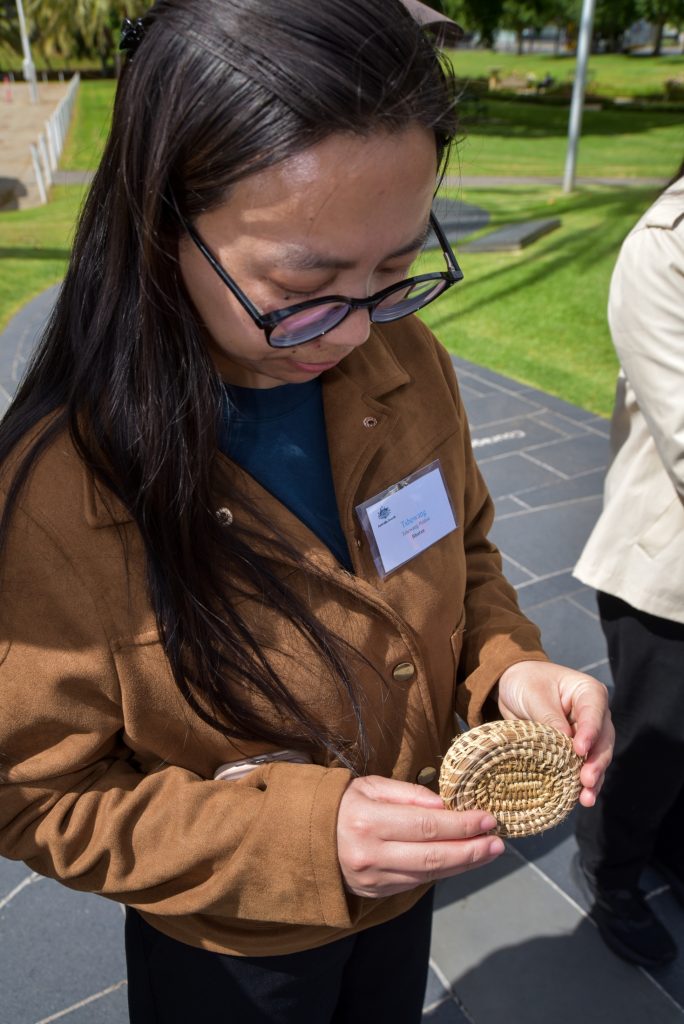
Tshewang looks at an Indigenous-made basket during a separate Australia Awards Indigenous engagement event in Adelaide in November 2025.
“One of the most meaningful lessons was that weaving does not have to be perfect, rather it is about slowing down, trusting the process and appreciating the journey as much as the finished product,” she said
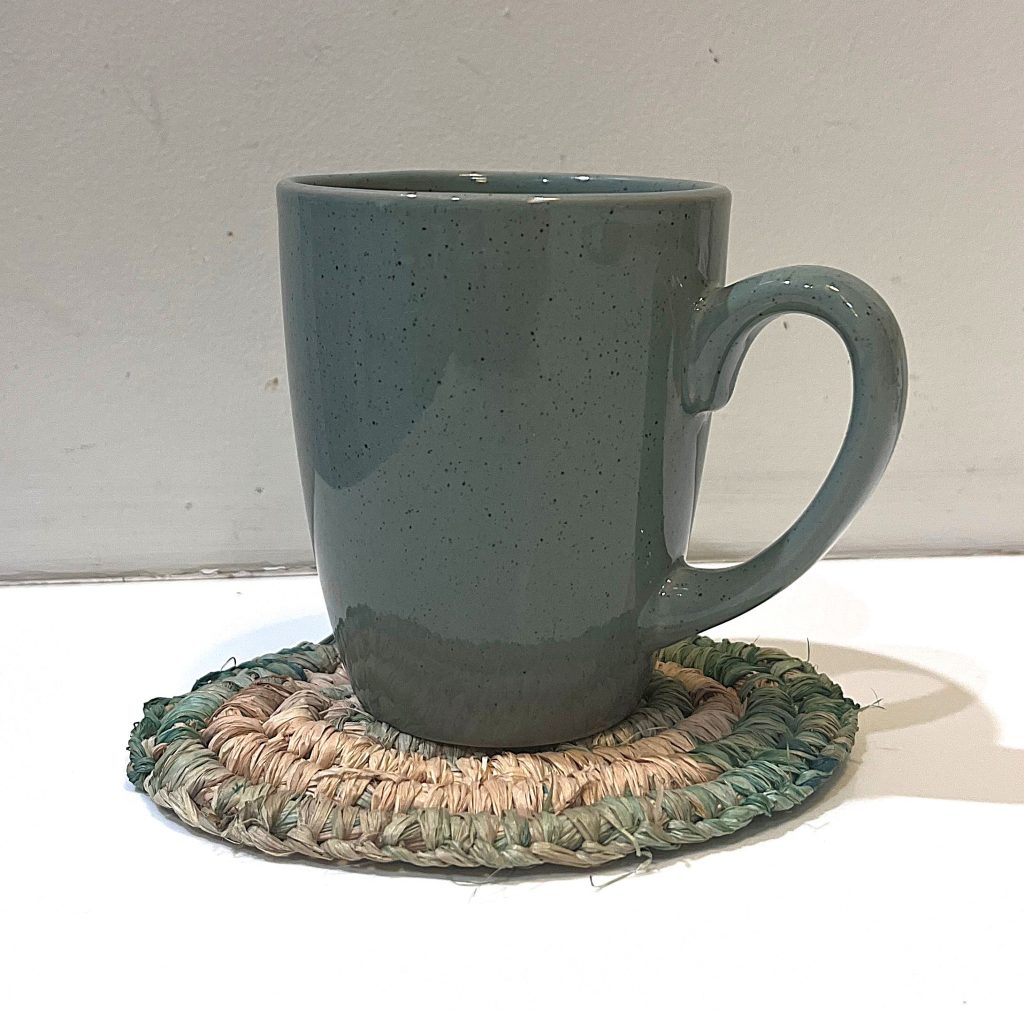
Tshewang’s completed weaving work from the workshop with Ronnie Jordan.
Also in June, Bhutanese Scholar Ambassador Sherab Jatsho, together with two other Scholar Ambassadors, facilitated scholars’ participation in an Aboriginal Cultural Connection Workshop. The two-hour session, which was hosted by the North & West Melbourne Neighbourhood Centre in collaboration with Yarn Strong Sista, offered the scholars the chance to learn about Aboriginal culture through storytelling, conversation and creative activities in a welcoming community environment.
The workshop concluded with a hands-on ochre-inspired art activity guided by artist Annette Sax, a proud Taungurung woman from the Eastern Kulin Nation. Annette encouraged the scholars to be creative with natural materials while sharing their own cultural identity stories.
Collectively, these experiences gave the scholars practical and reflective ways to engage with First Nations Australians and learn about their cultures and knowledge systems. As NAIDOC Week approaches, their reflections highlight how cultural learning can deepen respect and create connections across countries and communities.