Bhutanese scholars discover the power of networking and build bridges at Scholars Symposiums
Posted: 17 December 2025
From October to December, 17 Bhutanese Australia Awards scholars participated in five Scholars Symposiums across Australia. These events, which had the theme of From Learning to Leading: Make an Impact, were designed to help scholars develop the skills they need to be changemakers after completing their Scholarships.
Each symposium began with an address from a representative of the Australian Department of Foreign Affairs and Trade (DFAT). Speaking at the Canberra Symposium, Lucienne Manton, the Assistant Secretary of DFAT’s Mainland South and Central Asia Branch, said, “The granting of an Australia Award marks a recognition of potential. We are pleased to support activities like this Symposium as one way to help you build on that potential and become changemakers for sustainable development—truly taking the step from learning to leading.”
Delivering opening remarks in Melbourne on behalf of the scholar cohort, Bhutanese scholar Sherab Jatso said, “When I reflect on what led me to apply for an Australia Awards Scholarship, I am reminded of a deep personal conviction—the desire to make a meaningful difference, not just in my professional field, but in the broader development of my community and country. For many of us, this Scholarship symbolises more than an academic opportunity; it represents hope, responsibility and the power to contribute meaningfully to positive change.”
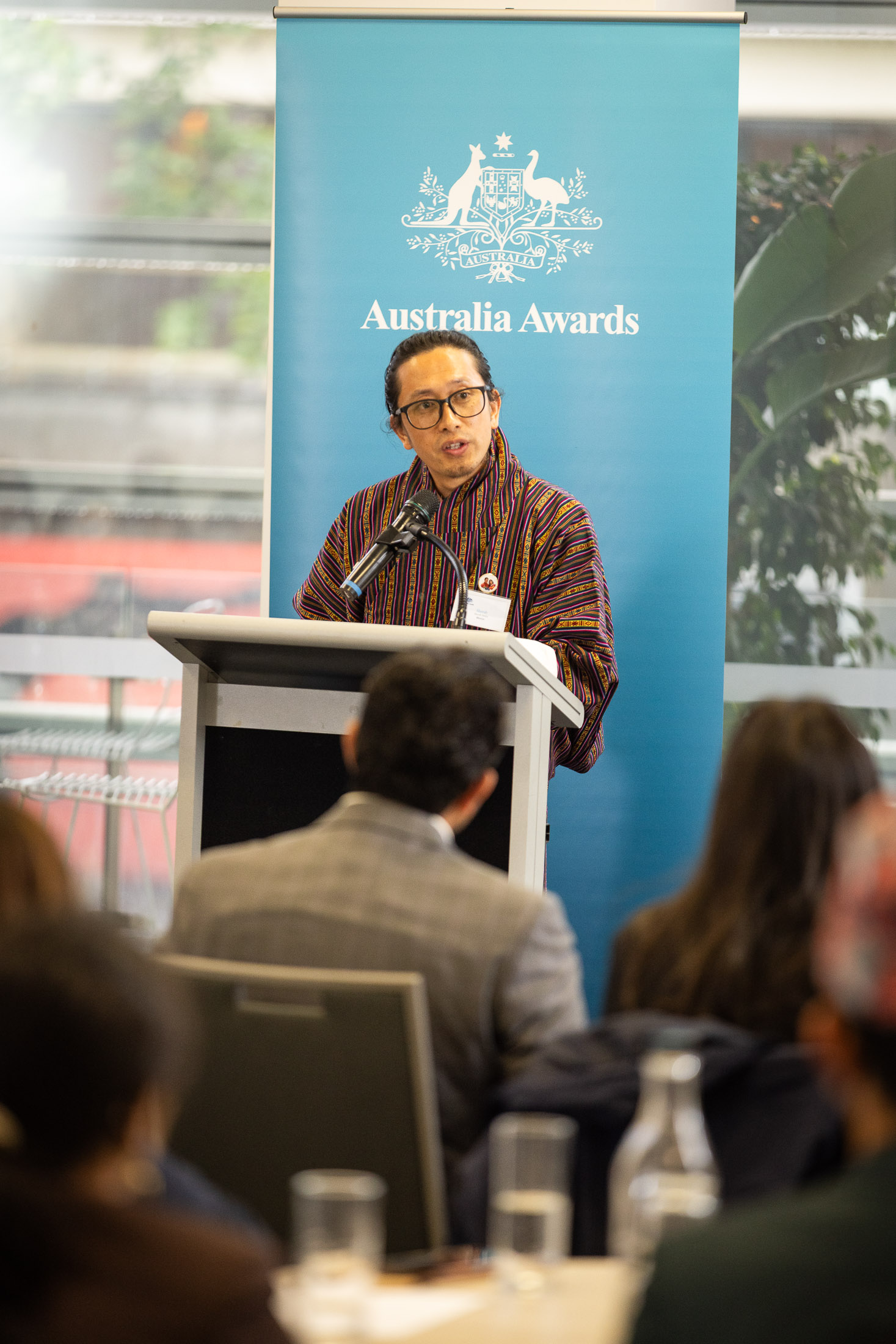
Sherab Jatso delivers opening remarks at the Melbourne Symposium on behalf of the scholar cohort.
A highlight of each symposium was a panel of expert speakers drawn from the Australian Government, the diplomatic or consular corps, and the development sector. Panel members spoke about a variety of subjects relating to leadership, including the importance of values for leaders, their tips for networking and advice on advocating for change. These speakers included:
- Senator Charlotte Walker, the youngest person elected to Australia’s Senate, in Adelaide
- Katie Smith, the Director of DFAT’s South Asia and Mongolia Section, in Canberra
- Catherine Parsons, Senior Advisor, Business and Government Engagement at Walk Free, in Perth
- Nayomi Kannangara, CEO of the International Women’s Development Agency and an Australia Awards alumna herself, in Melbourne.
“Listening to the panellists, I realised how important networking is for both personal rapport and official engagement,” said Canberra-based Bhutanese scholar Sangay Wangdi.
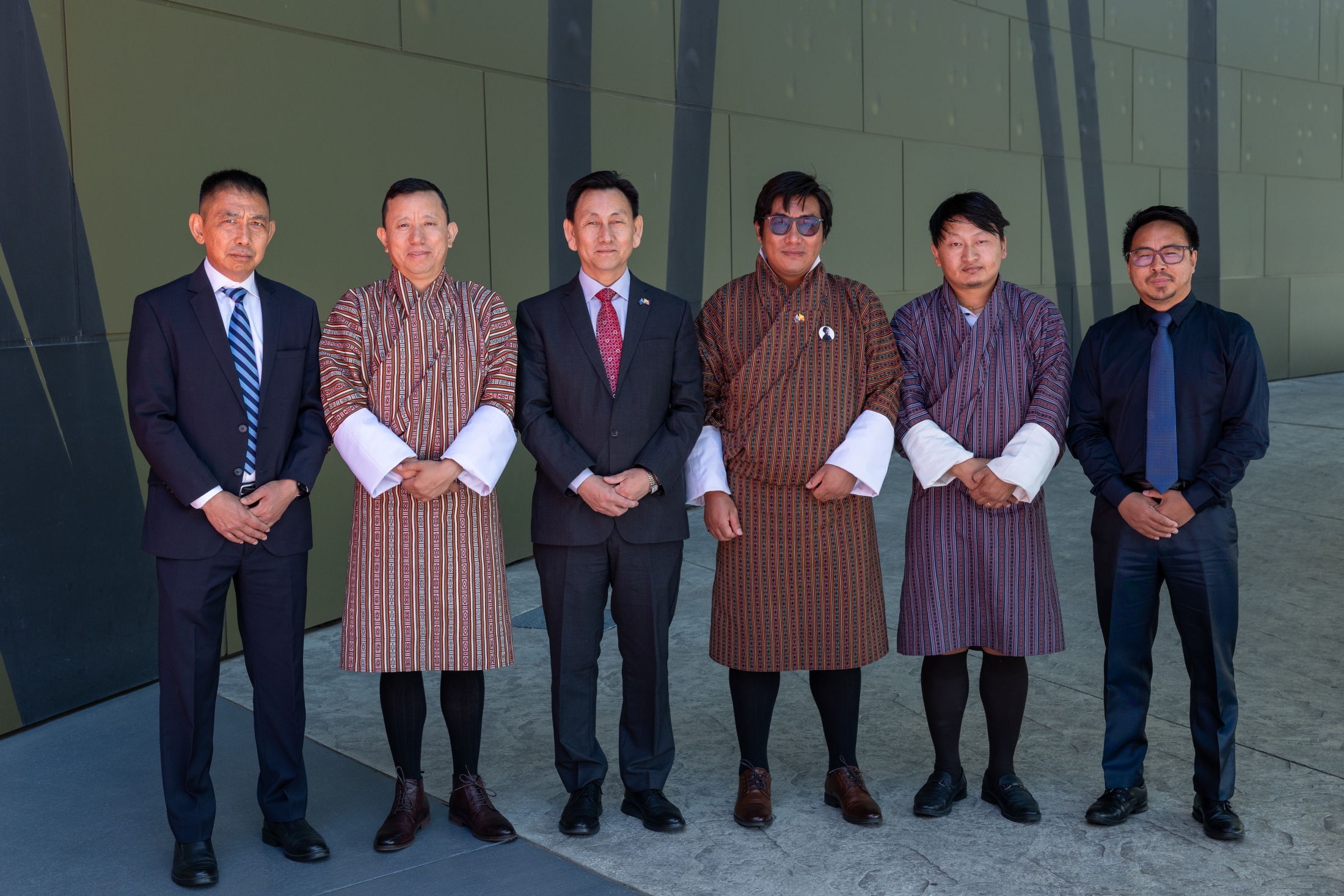
Sangay Wangdi (third from right), along with other Canberra Symposium participants and representatives of the Royal Embassy of Bhutan (left, third from left, and right).
The afternoon of the first day of each symposium was dedicated to leadership or communications training, designed to assist scholars to put into action what they had heard during the opening remarks and panel discussion in the morning.
Reflecting on this training in Melbourne, Sherab Jatso said, “Among the various sessions [of the Symposium], the leadership component has been a particular highlight, offering meaningful insights that will continue to inform our professional growth.”
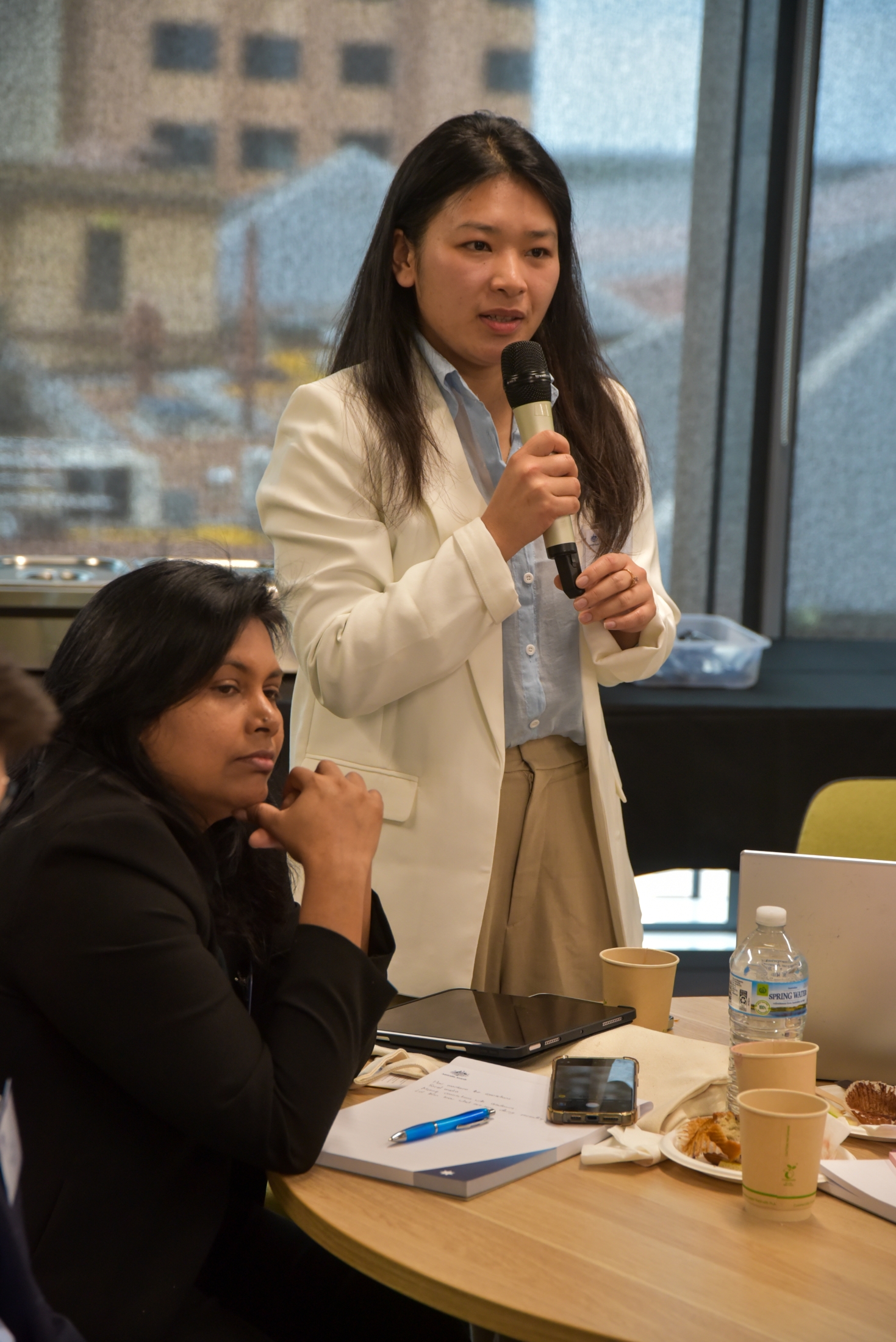
Bhutanese scholar Jigme Lhasen participates in the leadership training in Adelaide.
The second day of the symposiums saw scholars consider their Development Impact and Linkages Plans (DILPs) and whether they needed to update them in light of their time in Australia and what they had learnt on the first day of the symposiums.
Scholars also had the opportunity to provide their peers with an overview of their DILP and outline how their studies and professional development activities in Australia would help them to implement their plans. In Brisbane, Bhutanese scholar Aruna Sinchuri shared what she had done to build complementary skills to her Master of Construction Management at Central Queensland University. In Perth, Bhutanese scholar Lhapchu shared how he intends to apply the knowledge he has gained studying a Master of Project Management at Curtin University to benefit Bhutan’s hydroelectric sector.
To finish the symposiums, scholars engaged in cultural activities with First Nations Australians. These activities included having an art lesson from Indigenous teachers in Brisbane, Melbourne and Perth; viewing Indigenous art in galleries in Canberra and Adelaide; and learning to throw a boomerang in Brisbane. Reflecting on her experience in Brisbane, Bhutanese scholar Tashi Dema said, “It was my first time holding a boomerang, and I had a great time learning about its significance, and the meaning behind Aboriginal paintings. It was both fun and meaningful.”

Tashi Dema holds up the boomerang she painted at the Brisbane Symposium.
For many scholars, the most valuable aspect of the events was the opportunity to network with other scholars from across South Asia and Mongolia.
“The Australia Awards Scholars Symposium didn’t just open doors, it built bridges,” said Melbourne-based Bhutanese scholar Dorji Wangdi. “Through the Symposium, I discovered the power of networking and formed lasting bonds with diverse scholars and First Nations voices that continue to inspire.”
Bhutanese scholar Karma Yuden Dorjee said, “The sessions (both the panel as well as the leadership training) taught me just how simple it is to network and be a leader. All it takes is a small step, a small effort as simple as ‘showing up and saying hello to someone’.”
Summing up the views of many participants, Bhutanese scholar Tsheyang Choden said, “The Symposium has been a very insightful and engaging one. The facilitators and panel members were all very knowledgeable and inspiring.”