Alumna promoting civic responsibility and inclusive, participatory development in Bhutan
Posted: 9 March 2026
This International Women’s Day, we celebrate the contributions of Tandin Wangmo, the Executive Director of the Bhutan Centre for Media and Democracy (BCMD), one of Bhutan’s earliest registered civil society organisations. Since its establishment in 2008 and formal registration in 2010, BCMD has played a pivotal role in strengthening media literacy, civic engagement and democratic culture in the context of Bhutan’s transition to a constitutional monarchy.
Tandin completed the Australia Awards Regional Short Course on Women in Executive Leadership during 2024 and 2025, alongside participants from Bhutan, India, Maldives, Pakistan and Sri Lanka. She says that the course strengthened her understanding of gender through a structured, intersectional lens across diverse cultural contexts. Furthermore, engaging with participants from varied backgrounds provided insights into complex norms, challenges and opportunities facing women and girls globally.
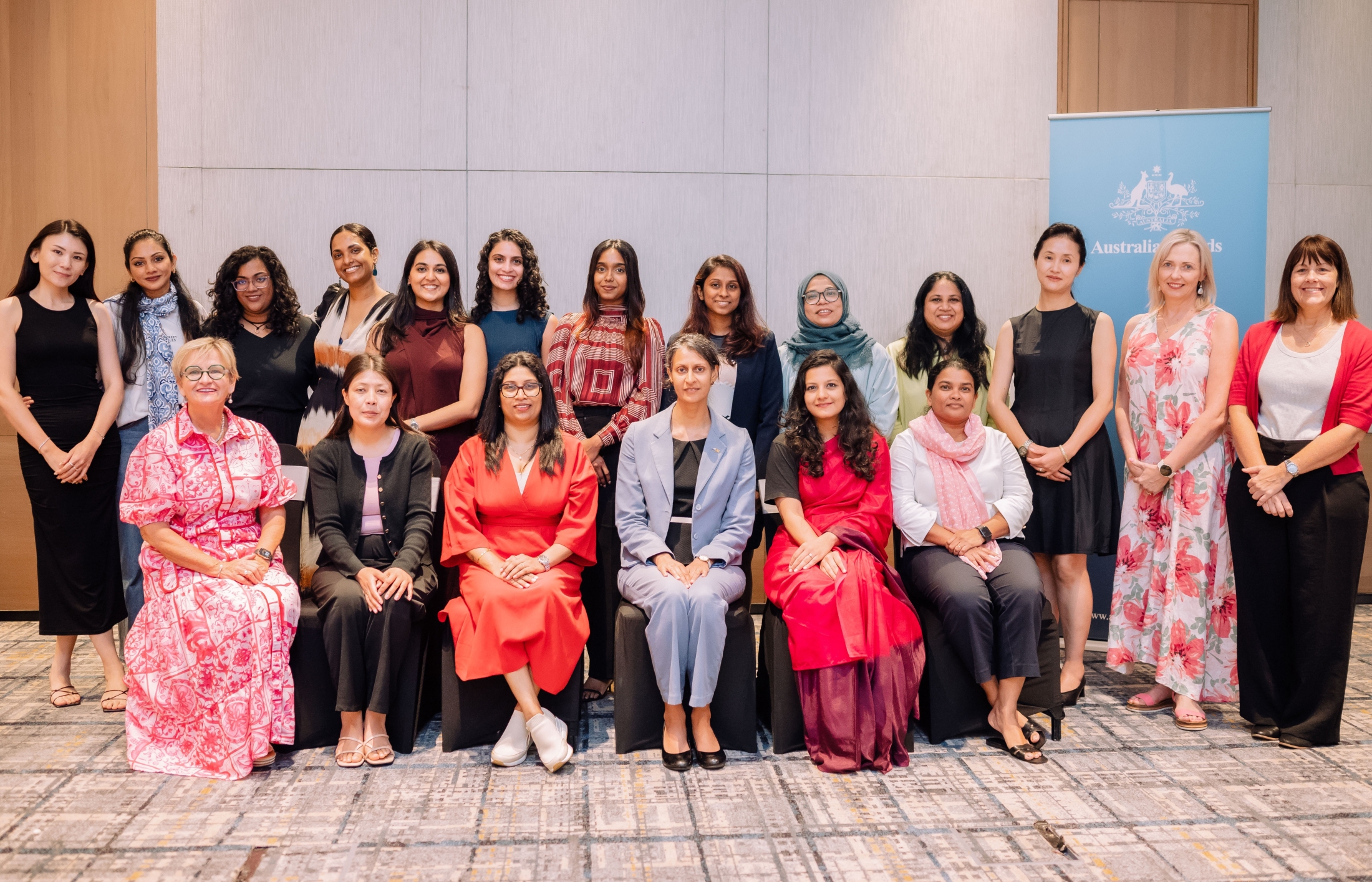
Tandin (back row, third from right) marks the completion of the Short Course at a ceremony in Colombo, receiving her certificate from Lalita Kapur, then Australia’s Deputy High Commissioner to Sri Lanka.
Tandin emphasises that good governance must remain central as Bhutan strengthens its constitutional democratic model. She believes institutions and citizens alike share a profound responsibility to foster collective wisdom and inclusive decision-making for sustainable development. With over 19 years of experience in the civil service, she brings extensive knowledge in development planning, donor coordination, resource mobilisation and local governance—experiences that supported her to assume her current leadership role in September 2023.
Reflecting on her career transition from the government to the non-government sector, Tandin describes the transition as both challenging and inspiring. She remains motivated by the opportunity to serve her King, country and people through an organisation that is dedicated to empowering citizens, fostering civic responsibility, and nurturing a democratic culture grounded in Bhutanese values and the vision of Gross National Happiness.
In her current role, Tandin guides her team in implementing a wide range of youth, media, governance and gender programs that nurture critical thinking, civic engagement and participatory planning across communities. However, she acknowledges persistent challenges, including limited financial and human resources, high attrition rates across sectors, and frequent changes in local government leadership. These factors disrupt continuity and require ongoing investment in capacity-building. Moreover, varying levels of civic awareness, gender disparities and structural barriers continue to limit the participation of women and girls, particularly in political spaces.
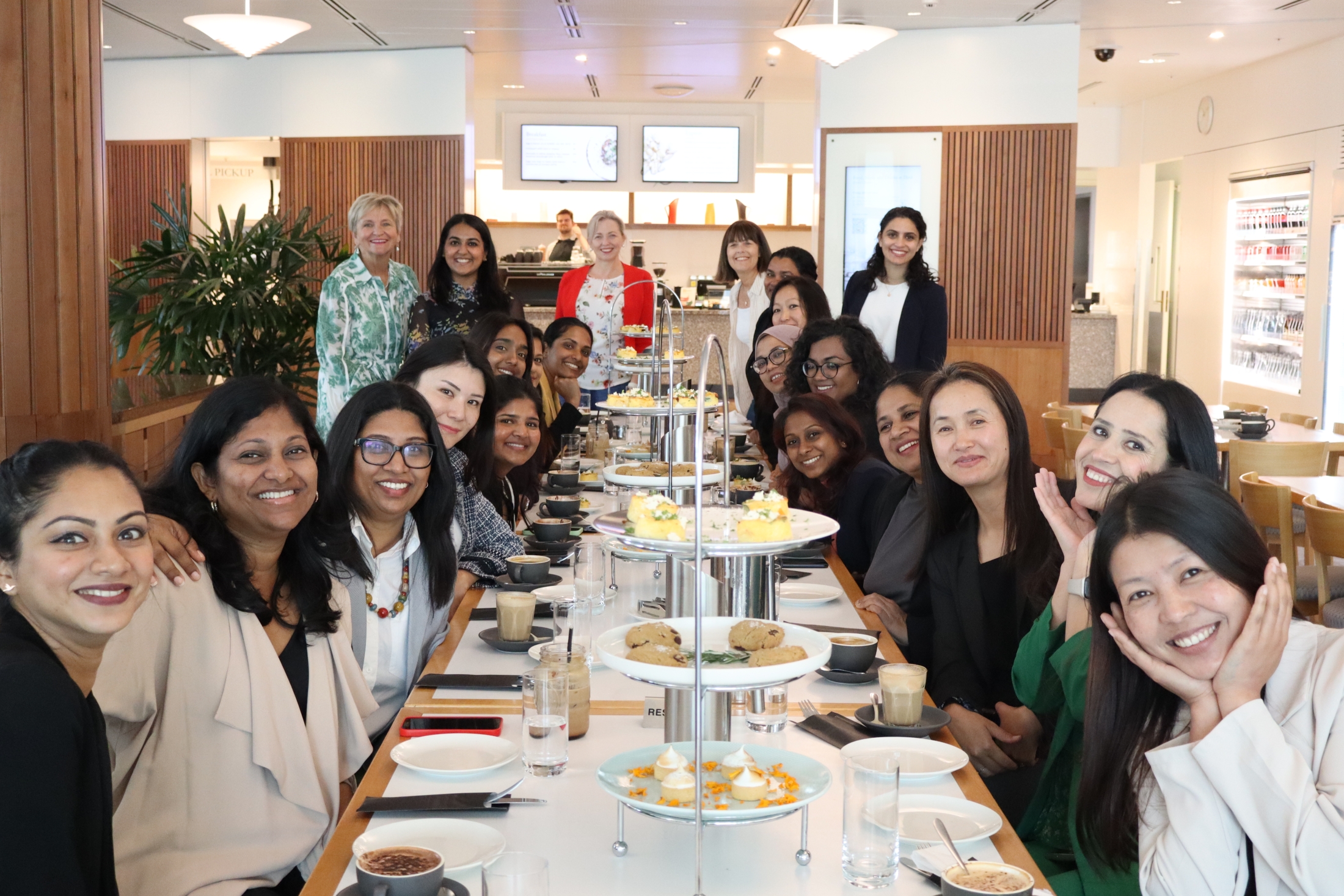
Tandin (right row, third from front) pictured during a networking event with course leaders and other Short Course participants.
To respond to these challenges, Tandin spearheads initiatives at both local and national levels aimed at strengthening women’s leadership, promoting gender-inclusive environments and fostering community-wide engagement for balanced gender representation. Under her leadership, BCMD has developed a structured framework to support aspiring women leaders through targeted training needs assessments and tailored interventions. A dedicated training module is also underway to deliver context-sensitive capacity building, complemented by mentorship and peer-support networks that equip women with the confidence and competencies needed to participate meaningfully in Bhutan’s democratic processes.
She explains that learnings from the Short Course helped her refine BCMD’s gender program design, and also informed broader institutional dialogues on gender equality. “The course reinforced my conviction that meaningful equality requires women’s active participation in shaping laws, electing leaders, influencing policy and modelling inclusive leadership,” she says. “I believe that progress depends not on adopting masculine norms, but on embracing authentic leadership styles that create space for all women to contribute fully to society.”
Since she completed the Short Course, Tandin and her team have been actively preparing for Bhutan’s local government elections, which will be held in early 2027. Their gender-focused work aligns with the National Gender Action Plan and includes targeted support for aspiring women leaders, as well as collaborations with mainstream media to advance constructive gender narratives. The team work towards developing human-interest stories that highlight not only women’s leadership journeys but also the enabling environments that support women’s participation. Recognising that sustainable change requires collective action, they are also engaging families and communities, identifying male champions and youth advocates to promote gender equality as a shared social responsibility.
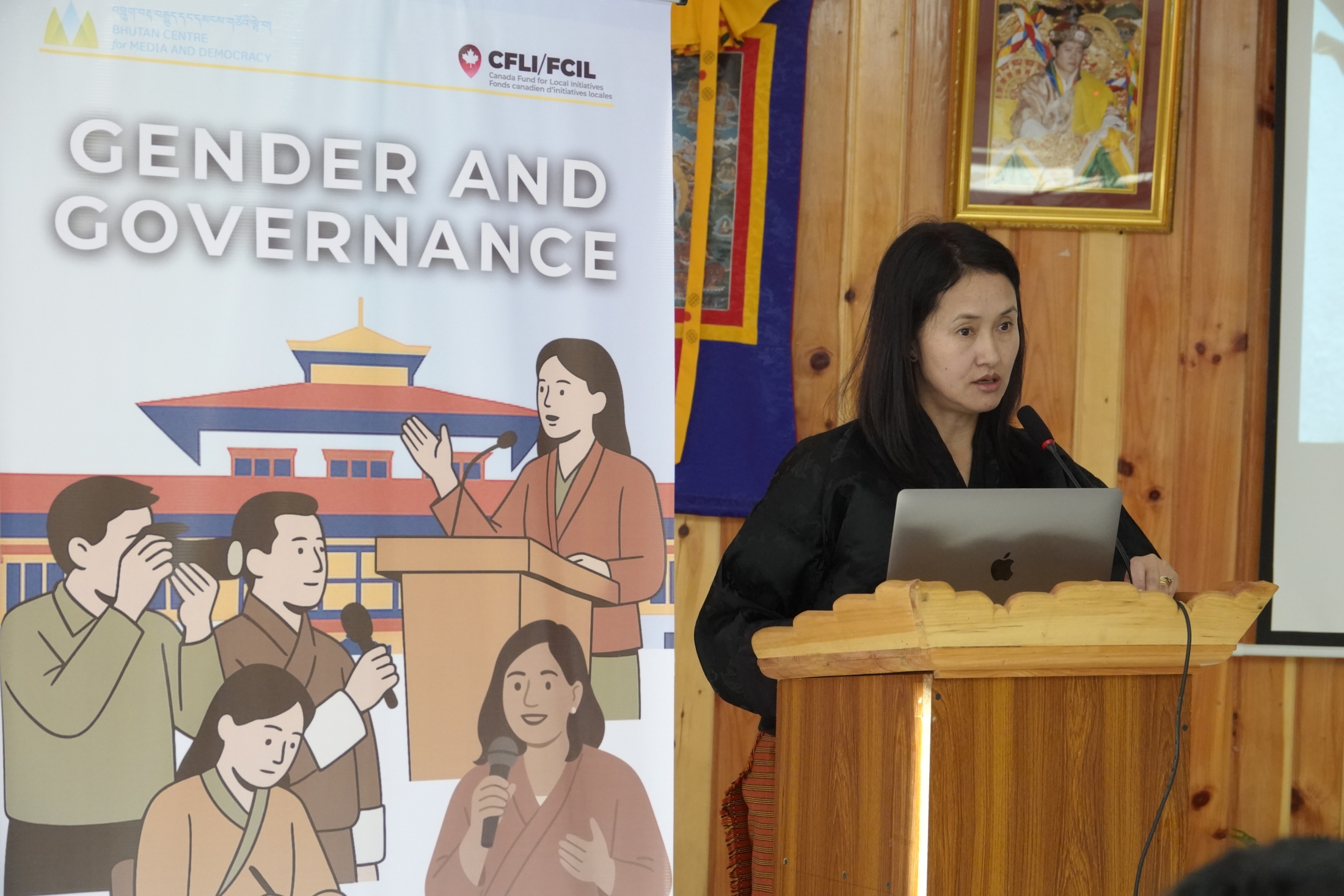
Tandin conducting a gender-sensitive reporting training for media focals in Bhutan.
On a personal level, Tandin practices a gender-responsive approach in her daily life, particularly in raising her two children—a daughter and a son. She strives to model shared responsibility, respect and equal opportunity, encouraging both to value others regardless of gender and to advocate for equality in their own lives.
As she reflects on this year’s International Women’s Day theme (‘Rights. Justice. Action. For ALL Women and Girls’), Tandin shares a message of inclusivity and equality. “Equality begins when we actively work together to build a truly inclusive and progressive world for all,” she says.