

Strengthening Bhutan’s climate disaster risk management
Posted: 5 June 2026
Yang Dorji is the Chief Program Officer of the Disaster Preparedness and Response Division (DPRD), Department of Local Governance and Disaster Management (DLGDM) under Bhutan’s Ministry of Home Affairs. DLGDM serves as the national coordinating agency for disaster management and the executive arm of the National Disaster Management Authority.
Yang is one of eight officials from Bhutan’s Ministry of Home Affairs and Ministry of Energy and Natural Resources who recently completed an Australian Professional Opportunity on Forest Fire Management with the support of Australia Awards. This study tour blended classroom lectures and field visits, giving participants insights into Australia’s fire management systems at both national and state levels.
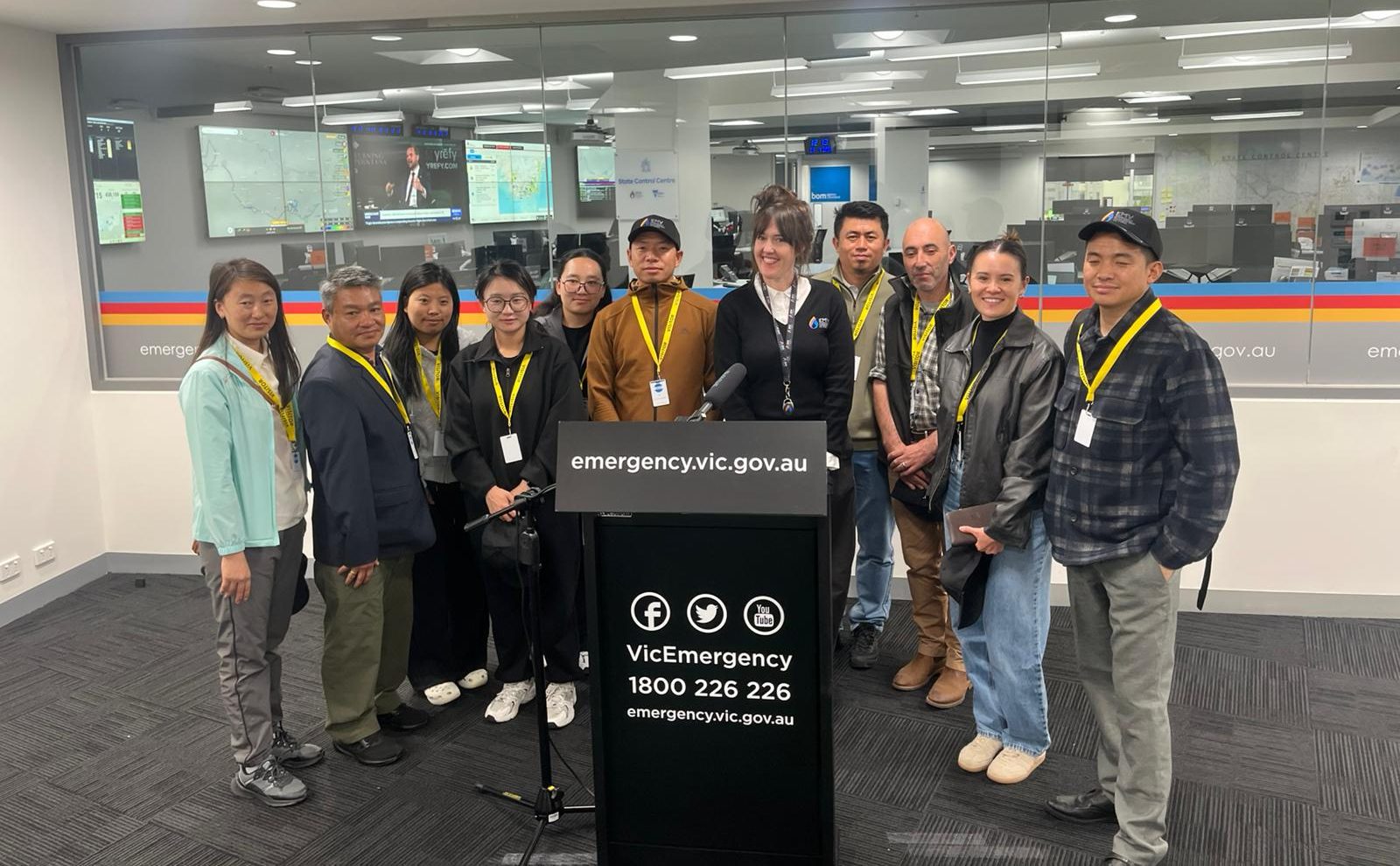
Yang (2nd from left) pictured with other study tour participants with staff from the Victoria State Operations Centre.
With more than 27 years of experience in education and emergency management, Yang is a seasoned leader in disaster preparedness and management. He began his career as a young officer with the Ministry of Education (now the Ministry of Education and Skills Development), where he helped develop the Ministry’s first Disaster Management and Contingency Plan, as well as disaster preparedness and response manuals for schools. He also contributed to educational resources, mass earthquake drills, and the establishment of the National Action Plan for School Earthquake Safety and Bhutan’s emergency coordination mechanism.
In his current role as the Chief Program Officer at DPRD, Yang leads efforts to strengthen disaster readiness and response. His team delivers search and rescue training for first responders, manages equipment distribution, and runs simulation exercises. They also coordinate the Incident Command System, including training and oversight of the National Emergency Operation Centre. Under Yang’s leadership, the DPRD is also responsible for Bhutan’s National Forest Fire Prevention and Response Strategy, focusing on prevention, community preparedness and inter-agency coordination.
As Bhutan faces growing climate risks—including erratic rainfall, flash floods, and increasing forest fires—Yang’s work has become even more critical. He emphasises the growing role his organisation is playing to equip local governance systems to manage these risks, with a focus on capacity building and strengthening community-level preparedness.
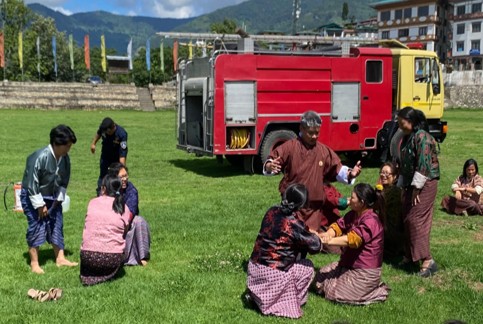
Yang training local women leaders on fire safety and casualty lifting techniques.
He notes that Bhutan has strong policy frameworks to address climate change and disaster management that promote community engagement, integrate local knowledge, and emphasise sustainable practices, including the National Adaptation Program of Action and the National Disaster Management Framework. However, limited resources and capacity at local levels continue to hinder effective implementation.
Given these challenges, Yang valued the opportunity to participate in the Australia Awards-supported forest fire management program. The study tour allowed Bhutanese officials working on different aspects of disaster preparedness to learn and network with Australian experts and each other, supporting greater coordination in the future.
Yang said the experience strengthened his understanding of fire management.
“The Australian Professional Opportunity significantly enhanced my understanding of fire management by emphasising prevention, preparedness, and community engagement alongside traditional firefighting efforts,” he said. “Furthermore, a key insight from the program was the structured approach of incident management systems, which clarifies roles, responsibilities, and communication during emergencies—an area where Bhutan can improve for better coordination and efficiency.”
Yang is confident that the insights gained by the participants will enhance Bhutan’s fire management strategies and overall disaster resilience. He is now focused on integrating these “shared responsibility” models into Bhutan’s national strategy, including promoting structured incident management and strengthening community and school-based fire education programs to build a culture of preparedness.
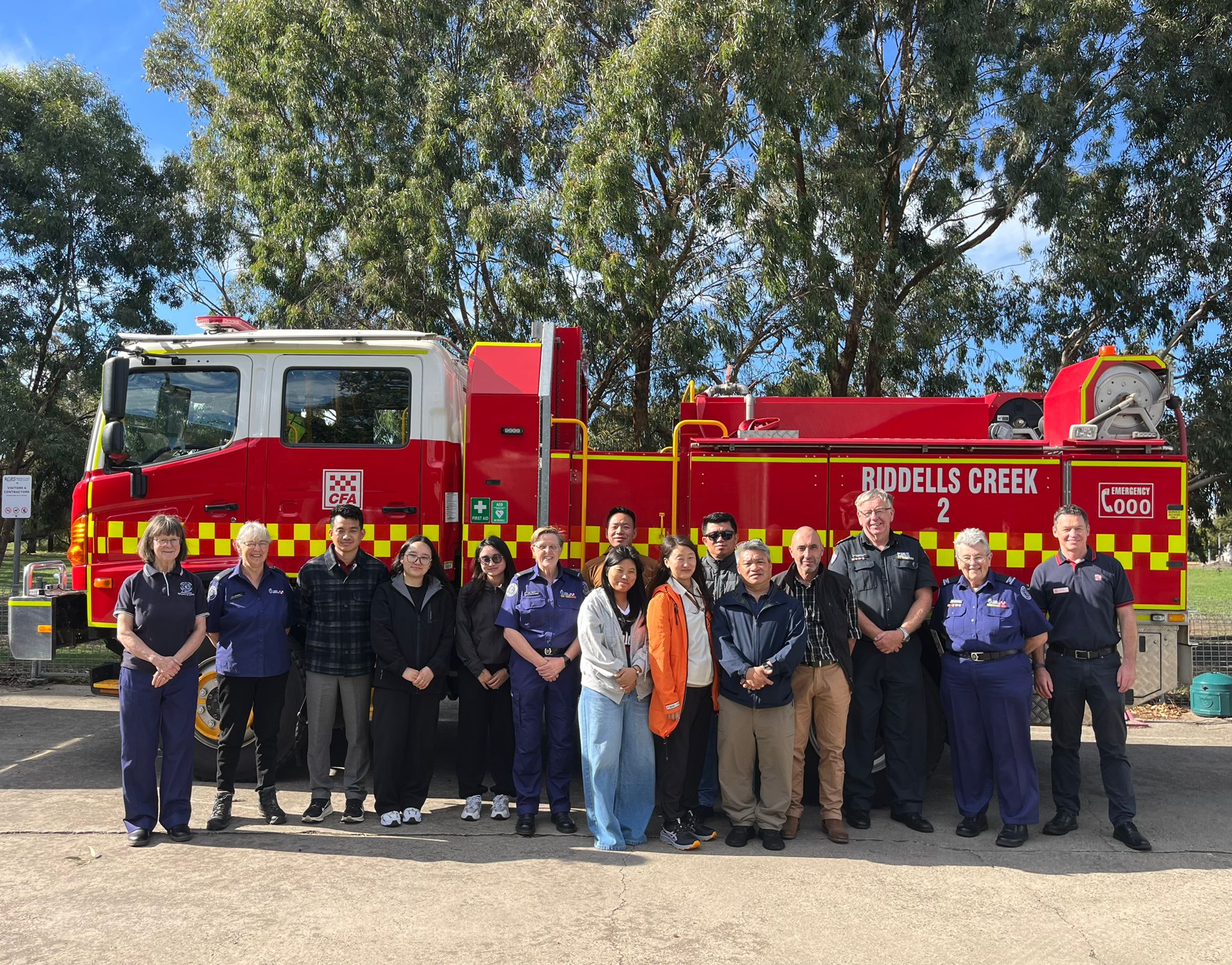
Yang (fifth from right) during a visit to Riddells Creek Fire Brigade in Australia.
Yang’s contributions to disaster preparedness have been widely recognised. He received a special COVID-19 Service Pin for his service as the Safety and Health Officer in Thimphu and Team Leader of the COVID-19 Tendruk Gewog Task Force. He also received a recognition medal for his humanitarian assistance during the Mandalay Earthquake Disaster on 28 March 2025, and two service medals for 10 and 20 years of service in the civil service, reflecting his commitment to public service and community resilience.
Reflecting this year’s World Environment Day theme Inspired by Nature. For Climate. For Our Future, Yang says, “Let us answer the global call for climate action with mindfulness and resolve. Bhutan’s commitment to maintaining 60% forest cover is more than a statistic; it is a sacred pledge to future generations. By strengthening public-community partnerships and embracing the middle path, we can ensure carbon neutrality and build a resilient environment. Today is the time to rethink our impact and act for our planet!”